Seasoned IT Infrastructure Leader with 22+ years of experience in data center computing, enterprise architecture, and technical solutions delivery. Specialized in designing and implementing high-performance AI training & inference infrastructure for enterprise customers.
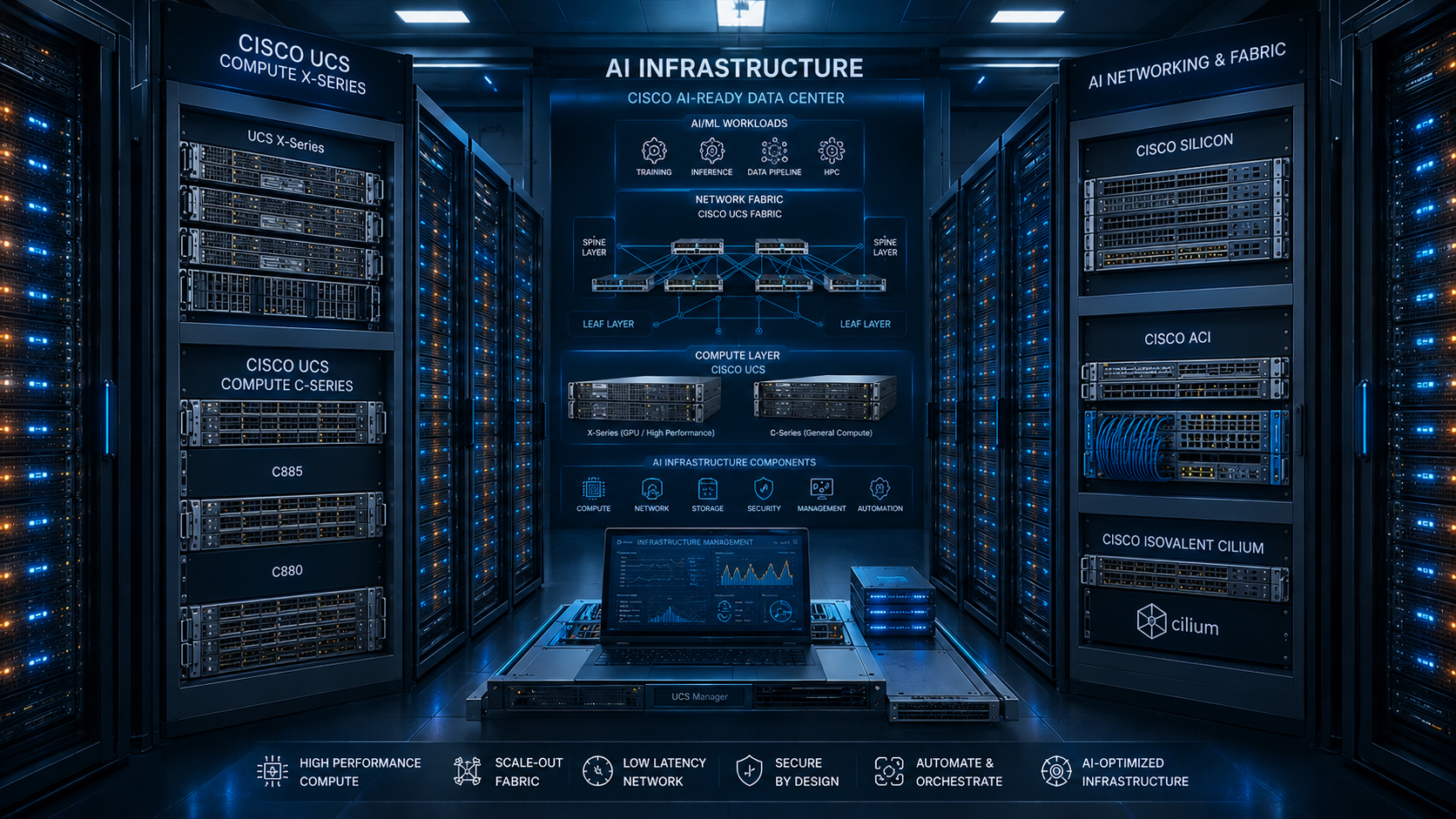
Expert in architecting scalable AI factories on Cisco UCS platforms with NVIDIA GPUs, OpenShift/Kubernetes clusters, high-speed RDMA networking, and hybrid cloud architectures.
Proven track record in infrastructure automation using Python, Ansible, and Terraform, along with the development of GenAI solutions including LangChain agents and fine-tuned Llama2 models.
Recognized for bridging deep technical expertise with customer-focused delivery — helping organizations accelerate their AI journey through optimized compute, storage, and networking solutions.
End-to-end solutions across AI infrastructure, cloud platforms, SAP, and enterprise automation.
Design and deploy high-performance AI training & inference clusters with NVIDIA GPUs, OpenShift, and RDMA networking on Cisco UCS platforms.
Architect and deliver hybrid cloud solutions across AWS, Azure, and GCP including Azure Stack, Express Routes, BGP, and VPN Gateways.
Develop LangChain agents, Webex bots, and fine-tuned Llama2 models for autonomous Day-2 operations and domain-specific AI use cases.
Build and maintain K8s/OpenShift clusters across cloud and on-prem using Kubespray, NVIDIA GPU Operator, and custom automation modules.
Automate compute provisioning with Terraform, Ansible, and Python — UCS, Fabric Interconnects, and OpenShift clusters at scale.
End-to-end SAP HANA TDI design, sizing, HA/DR implementations, OS/DB migration, and S/4HANA on Cisco UCS and cloud platforms.
Backing the hands-on AI, cloud, and infrastructure work above.

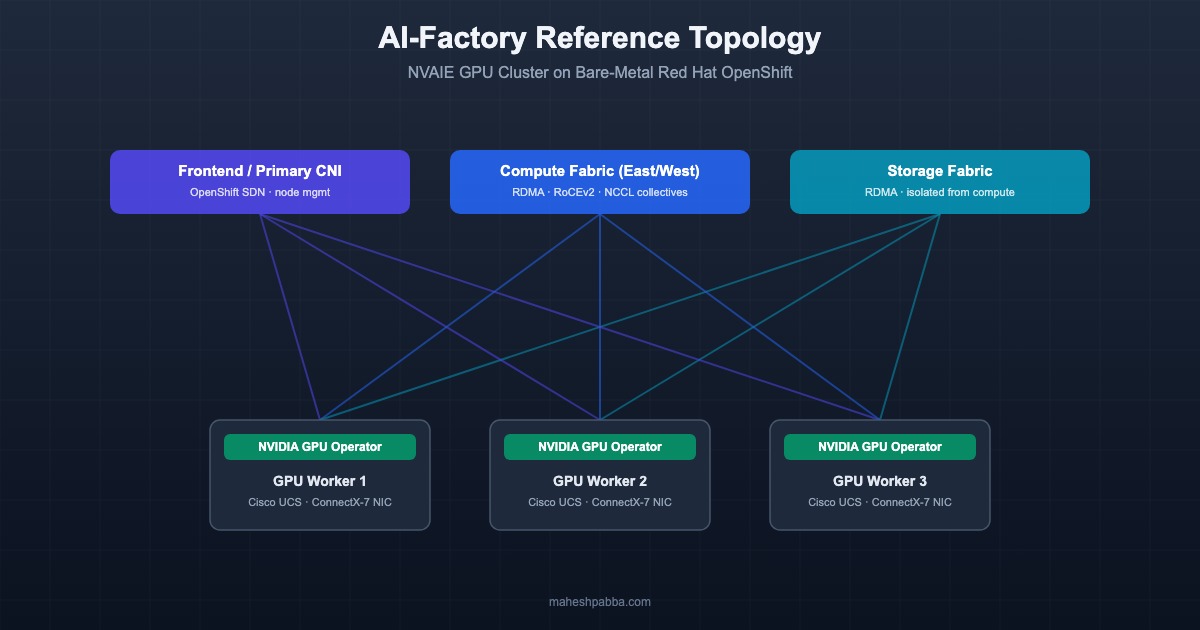
Standing up a GPU training cluster isn't a checklist you can run in any order. Rail-optimized fabric design, two operators that both touch the same kernel modules, secondary CNIs so pods can see RDMA NICs, and a validation stage that has to prove the fabric before anyone trains on it — sequence is the whole story. Here's the build order, end to end.

Redis doesn't get conference-talk glory, but without it, real-time multi-user AI systems fall apart. Single-use HMAC tokens, sliding-window rate limiting, session registry — here's the full implementation with production configuration and graceful degradation patterns.

Cache answers "have I computed this before?" Memory answers "what do I know that helps me now?" They're different systems with different lifecycles — and combining them is what makes an enterprise AI platform dramatically more capable and economical than a stateless chatbot.